

Strengthening Cocoa Supply Chains: Lessons from Strengthening Smallholder Market Access in Latin America
Case Studies
Strengthening Cocoa Supply Chains: Lessons from Strengthening Smallholder Market Access in Latin America
Across Latin America, smallholder cocoa farmers are increasingly connected to global supply chains, but inconsistent quality, limited traceability and weak market linkages can restrict their ability to participate in higher-value markets. Experience from Lutheran World Relief’s cocoa programming in Ecuador, El Salvador, Guatemala, Honduras, Nicaragua and Peru shows that sustainable market access requires more than connecting farmers with buyers. It depends on strengthening the broader cocoa market system, including producer organizations, commercial relationships, product quality, traceability and access to finance.
From 2019 to 2025, cocoa market access activities across the six countries engaged 63 partners and reached 27,279 cacao farmers. Strengthening relationships between producer organizations and exporters and chocolate companies helped expand direct market connections, reduce reliance on intermediaries and spot markets, improve negotiation capacity and increase access to services such as technical assistance and pre-financing. Strong producer organizations proved especially important, providing the scale, governance and technical capacity needed to aggregate production, manage quality and negotiate effectively with buyers.
Improving cocoa quality was also critical to accessing higher-value and international markets. Investments in fermentation, drying and post-harvest handling, international quality standards, tasting capacity and flavor profiling helped producer organizations produce more consistent and verifiable cocoa and better communicate its quality to buyers. Stronger quality controls and traceability systems can also support food safety, transparency and more reliable sourcing while reducing risks within international cocoa supply chains.
Access to finance further enabled farmers and producer organizations to invest in farm rehabilitation, post-harvest infrastructure and cocoa commercialization. More than $22 million in financing was facilitated for approximately 7,058 cacao farmers. Experience showed, however, that finance is most effective when paired with functioning markets, strong commercial relationships and reliable quality systems. Together, these lessons point to a systems approach to cocoa market access built on capable producer organizations, high-quality and traceable cocoa, appropriate financial services, and long-term, trust-based relationships between producers and buyers.
Download Now Aug 07, 2026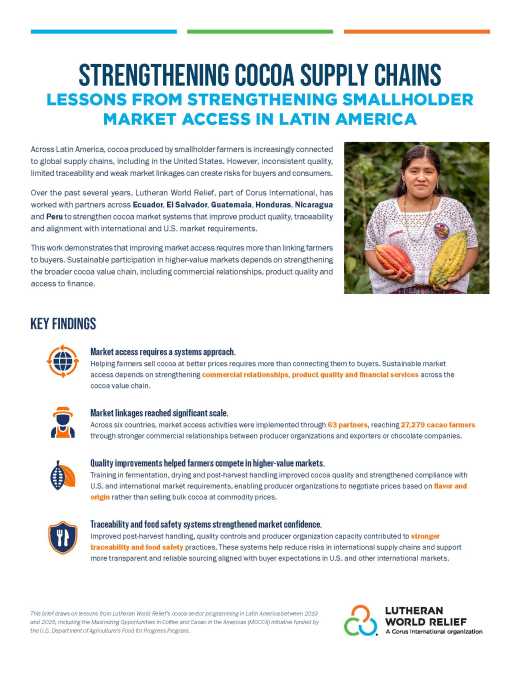
TECHNICAL RESOURCES
-
Technical Approaches
Local Capacity Strengthening Technical Overview
-
Case Studies
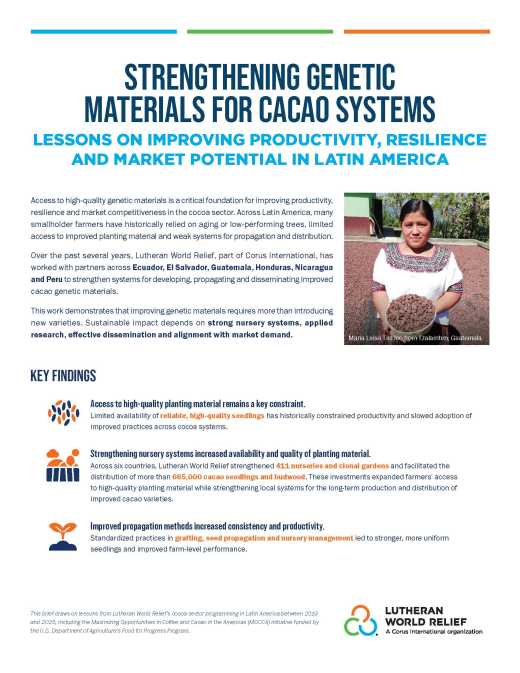
Strengthening Genetic Materials for Cacao Systems: Lessons on Improving Productivity, Resilience and...
-
Case Studies
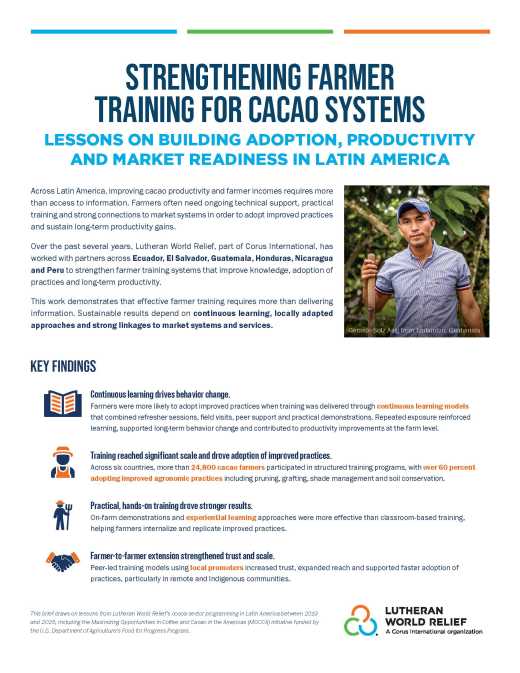
Strengthening Farmer Training for Cacao Systems: Lessons on Building Adoption, Productivity and Mark...
-
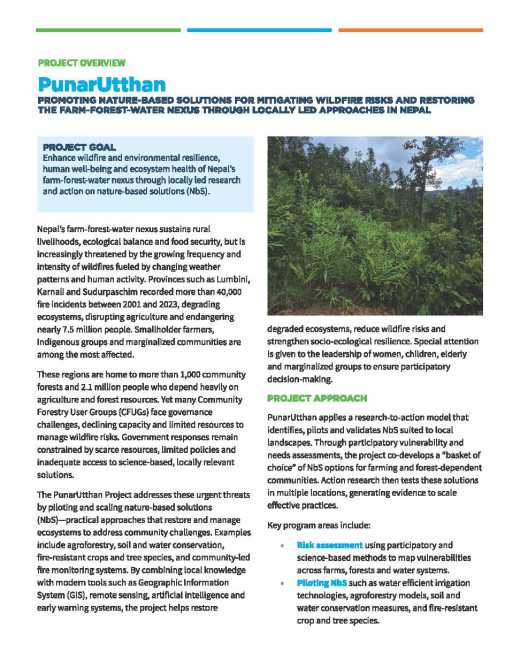
Project Overviews
PunarUtthan Project Overview
-
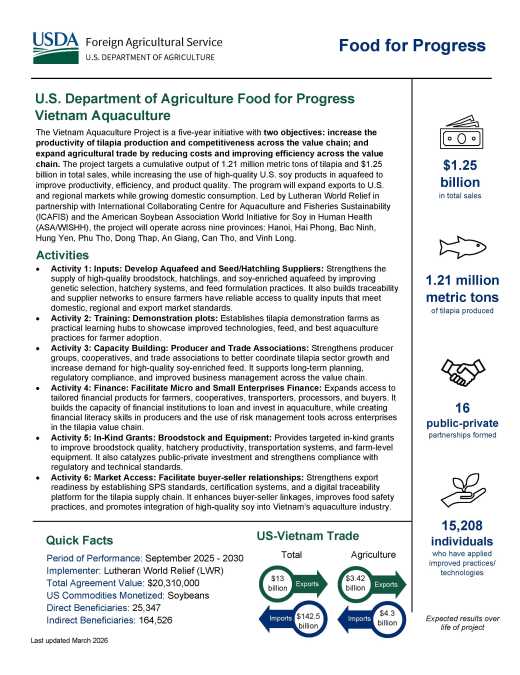
Project Overviews
USDA Food for Progress Vietnam Aquaculture Project Overview
-
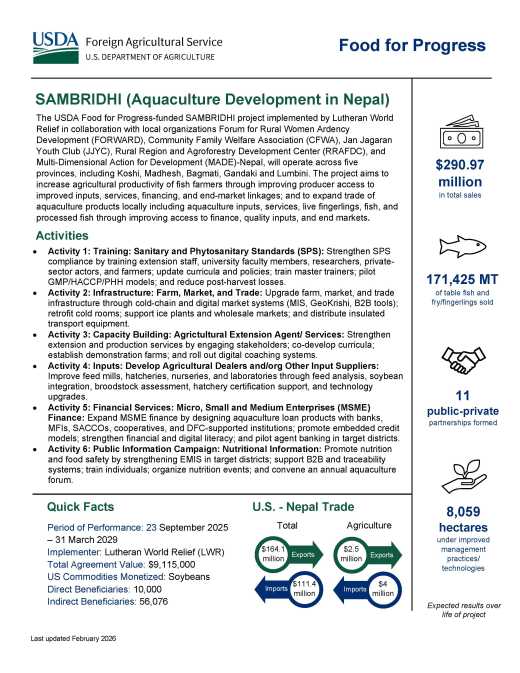
Project Overviews
SAMBRIDHI (Aquaculture Development in Nepal)
-
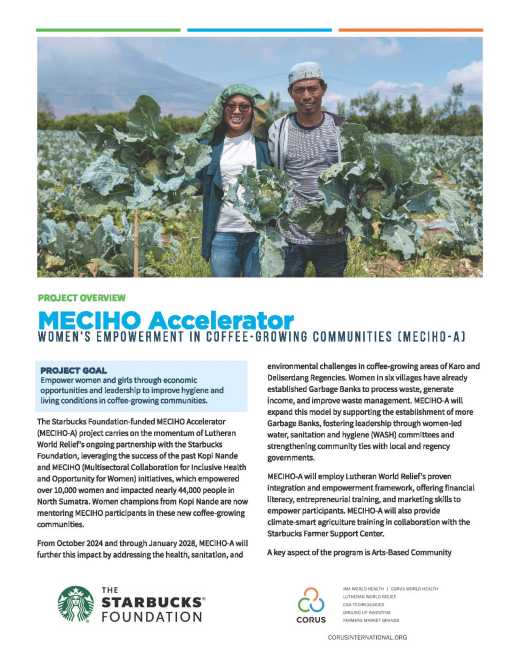
Project Overviews
MECIHO Accelerator Project Overview