


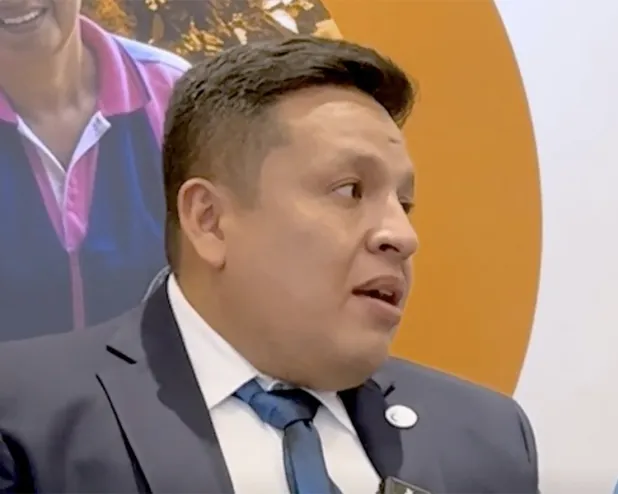
As Corus International expands our presence in Ecuador under the banner of Lutheran World Relief, we see opportunity to help redefine how development happens. We’re connecting communities, government, civil society and the private sector around shared solutions that can grow, adapt and last.
In Quito, our COO Mahmoud Bah and our Managing Director for Latin America Galo Quizanga reflected on what makes Ecuador such a compelling place for Corus’ integrated approach.
Ecuador is a country of possibility and contrast: strong infrastructure, export potential and private sector momentum exist alongside persistent rural poverty and communities still disconnected from opportunity. As Mahmoud put it, it can be easy to ask, “Why are we here?” in Quito; until you travel beyond the capital and see that “the extreme poverty is shocking.”
Watch Mahmoud’s and Galo’s full conversation:
What is the Corus Effect?
The Corus Effect is Corus International’s approach to bringing the right people, resources and ideas together so communities can move from vulnerability to long-term resilience and prosperity. In Ecuador, that means listening to rural communities, aligning with government priorities, engaging the private sector and building solutions designed to last.
Galo described Corus as a bridge and catalyst — an organization able to bring government, civil society, companies and communities to one table. “That’s what we call the Corus Effect,” he said: hearing the real needs of all stakeholders, seeing the full picture and designing holistic solutions that alleviate poverty while sparking growth.
Why Ecuador, and why now?
Ecuador’s development landscape is complex and uneven. Economic growth, export potential and private sector capacity coexist with rural poverty, informality and uneven access to basic services. That makes Ecuador an important place to advance development that reflects the realities of a middle-income country while staying rooted in the priorities of rural communities and families facing persistent barriers to opportunity.
That is where Corus’ integrated approach is especially relevant. Corus’ work is grounded in the 5 Fundamentals: place, nutrition, health, knowledge and income. Together, these essentials form the foundation people need to thrive. When families face barriers to even one of them, the effects can carry across generations. As Galo noted in the conversation, Corus’ strength is bringing “that versatility and that diversity of entities” to a human-centered approach that can address interconnected challenges that Ecuadorians face daily.
Corus also brings practical experience in Ecuador. Since 2018, our teams have worked in the country through Corus organizations Lutheran World Relief, CGA Technologies and Ground Up Investing, supporting agriculture, rural economies, youth employability and emergency response. Through the USDA Food for Progress MOCCA project, Lutheran World Relief helped strengthen cacao value chains, support producers and expand access to technical knowledge and finance. Combined with the expertise of Corus’ local staff and our growing networks across Ecuador’s private sector, that experience gives Corus the relationships and credibility needed to act now — and to scale solutions that can create sustainable value for communities, businesses and public-sector partners alike.
Engaging business while keeping communities at the center
Traditional development actors have not always known how to engage the private sector — or how to make the case for why businesses should see development as part of their own long-term success. Too often, partnerships have been framed as philanthropy or one-time support rather than as shared investments in stronger communities, more reliable supply chains and more resilient markets.
In Ecuador, Galo sees an important shift. Sustainability is no longer just “a philanthropic action.” For companies whose supply chains depend on farmers, rural communities and local producers, investing in resilience helps protect production, expand market access and build long-term value. In other words, development can align with business interests when it helps communities and companies grow stronger together.
Our expert teams help businesses to thrive, while creating meaningful impact for communities and smallholder farmers. That is why Mahmoud pressed a question central to Corus’ role: How can Corus ensure our resources catalyze investments that are impactful “not to the bottom line of the organization, but to the smallholder farmer.” For Galo, the answer starts with measurement — using evidence, community needs and clear indicators to show whether families, farmers and whole communities are truly better off. He says it also depends on alignment, which involves listening to communities, understanding government priorities, working with businesses ready to invest responsibly and turning shared goals into practical action. In Ecuador, Galo sees that alignment taking shape around security, economic development and health systems strengthening — priorities that increasingly connect local needs with U.S. priorities and global opportunity.
A new model for lasting impact
The discussion between Mahmoud and Galo captured both the promise and responsibility of this moment. Ecuador does not need development as usual. It needs partnerships that bridge urban and rural realities, align public and private priorities, measure what matters and keep communities at the center.
That is the Corus Effect in Ecuador: a practical, people-centered model for turning shared ambition into measurable progress — and helping communities build prosperity that lasts.